
Prioritize tiering, then assign equipment.
The level of security required for a conference room depends on the meeting's purpose. Prioritize room classification before investing in equipment, rather than deploying full-scale solutions upfront.
| Meeting Level | Typical Content | Recommended Actions |
|---|---|---|
| Public / Internal | General Business Communication | Centralized phone storage; routine pre-meeting check |
| Sensitive | Mergers & Acquisitions, Quotations, R&D Roadmap | Mobile device control + localized shielding + RF inspection |
| Core | Major decisions, foreign-related negotiations | Shielded Room or Shielding Tent + Nonlinear Junction Detection + Audio Masking + Dual-Operator Verification |
The purpose of tiering is to allocate budgets to truly sensitive scenarios while preventing excessive blocking in daily meetings, which could disrupt normal communication and emergency contacts.
Wireless isn't the only channel that needs protection.
- Cellular Wireless BugTransmits audio via 2G/4G networks with extended battery life and high stealth capabilities.
- Wi-Fi and Bluetooth Devices: Masquerade as chargers, speakers, or routers; once connected to the office network, exfiltrate data.
- UHF/VHF TransmitterLow-power continuous transmission; requires broadband scanning to detect.
- the phone itselfEven without recording enabled, some apps can capture ambient audio while the device is idle.
- Voice Recorder and Local Storage Device: Does not emit signals; relies solely on physical inspection and procedural controls.
- Structural TransmissionLaser vibrometry eavesdropping, power line carrier signals, and sound transmission via air conditioning and piping.
- Conference TerminalScreen casters, video conferencing hosts, and microphone arrays may serve as entry points.
Detection: Coordination of three main lines
RF Scan
Use a broadband receiver or spectrum analyzer to sweep 10 MHz–6 GHz. First, record the environmental baseline, then look for anomalous bursts, broadband noise, or unexpected carriers. Focus on areas around the perimeter of meeting rooms, suspended ceilings, lighting fixtures, and power outlets. Once a suspicious signal is detected, switch to close-range direction finding to pinpoint its exact location.
Nonlinear Node Detection
Nonlinear Junction Detector (NLJD) emits microwaves and receives second- and third-harmonic responses to detect electronic devices that are powered off. It also responds to metal corrosion and oxidized contacts, resulting in a high false alarm rate. Cross-verification with physical inspection is required; conclusions cannot be drawn from a single alarm alone.
Physical and Thermal Imaging Inspection
Inspect ceilings, lighting fixtures, outlets, smoke detectors, projectors, and the undersides of desks and chairs for wiring channels. Use thermal imaging to detect abnormal persistent heat sources. For audio recording devices that do not emit signals, this step is often the only effective detection method.
Hide: Local Priority, Control Leakage
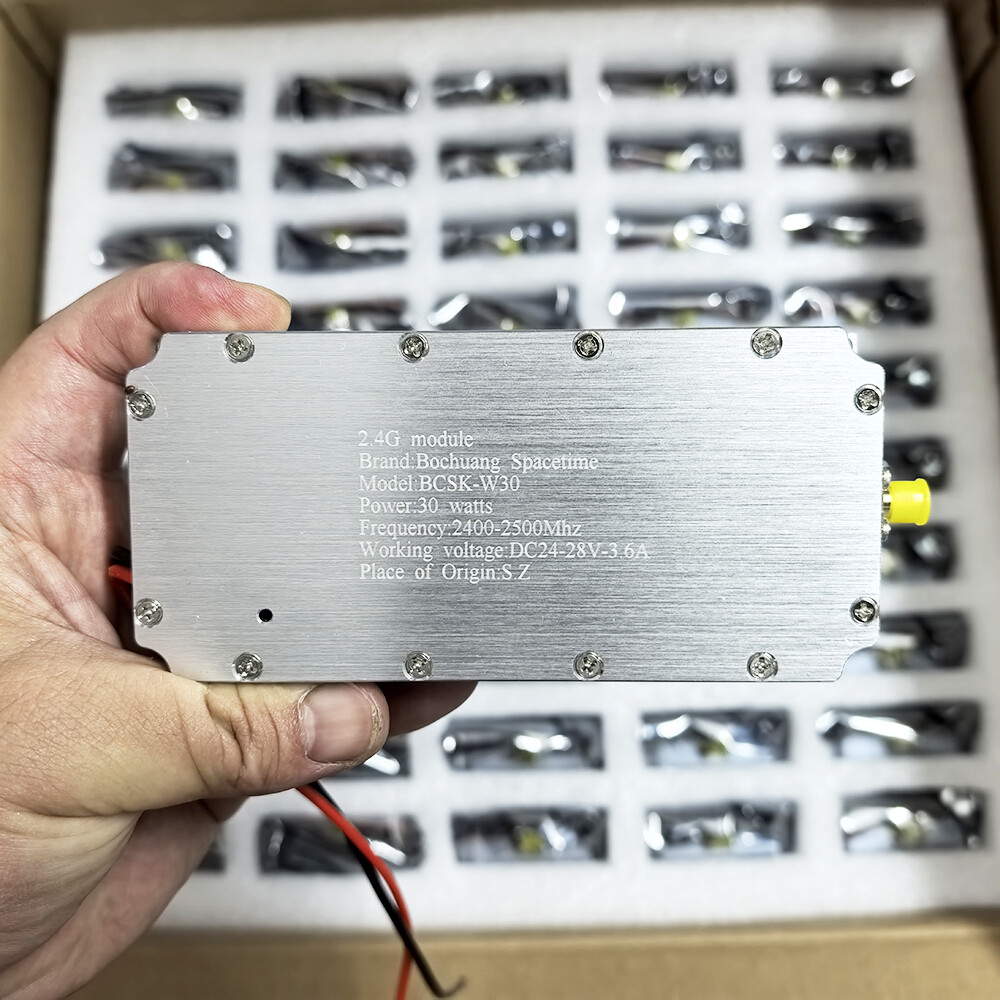
Conference room-level shielding typically uses low-power, directional antennas with zone control: coverage is limited to the interior of the room, antenna main lobes point inward, and power is adjusted based on field measurements to avoid affecting other areas on the floor. The shielding range must cover all cellular generations and Wi-Fi frequency bands; specific frequencies are determined by an on-site survey.
For core conference rooms, structural shielding can be achieved using shielded rooms, shielded tents, or shielding fabrics. Shielding effectiveness is measured in dB; typical engineering solutions for meeting spaces range from 40 to 80 dB. Actual performance depends on how doors, windows, cable penetrations, and ventilation openings are handled, as seams and penetrations are often the primary sources of signal leakage.
Acoustic and Structural Protection
- Sound insulation: Thicker door panels, sealing strips, and double-pane glass reduce noise transmission through doors, windows, and pipes.
- Sound masking: During meetings, play low-level white noise or masking sounds to reduce speech intelligibility. The typical target is a masking level of around 65–70 dB(A) indoors, adjusted to ensure it does not interfere with normal conversation.
- Structure: Check sound transmission paths through shared walls, ventilation ducts, and fire shafts; apply soundproofing where necessary.
Management measures are often more effective than equipment.
Most leaks stem from process gaps, not outdated hardware. Practical steps include: storing phones in shielded lockers before meetings; verifying attendee lists against device whitelists; prohibiting personal recording devices during sessions; conducting a quick post-meeting inspection by designated staff; controlling minutes by access level; and registering and centrally storing visitor devices.
Compliance boundaries
Anti-eavesdropping measures must be implemented within legal boundaries. Do not interfere with public mobile communications without authorization. Shielding devices must have the appropriate type approval, and their use requires proper authorization. Prioritize localized, directional, low-power solutions to avoid disrupting medical, fire, and emergency communications. For leased office spaces, coordinate with property management to prevent signal interference across entire floors.
A ready-to-implement bundled solution
- Pre-meeting 30 minutes: Perform RF scan to establish baseline; inspect ceiling, lighting, power outlets, and undersides of desks and chairs.
- 10 minutes before the meeting: Collect all mobile phones, confirm that signal-blocking devices are enabled and functioning properly.
- In Session: Enable sound masking, restrict unauthorized entry/exit, and log device and personnel activity.
- Post-meeting: Disable blocking, perform a brief recheck, and log any anomalies.
- Quarterly: Perform a full inspection including non-linear node detection and thermal imaging; update the equipment register.
Common Misconceptions
- Thinking: 1. **Analyze the Request:** * **Role:** Website Localization Translation Expert. * **Target Language:** en-US. * **Core Principles:** Product copywriting style (Amazon/Google UI), avoid translationese, concise/direct, keep placeholders `{0}`, `{1}` etc. unchanged. * **Input:** "以为买了屏蔽器就安全:不发射信号的录音设备与内部人员风险依然存在。" * **Output:** Only the translated text, no explanations. 2. **Analyze the Source Text:** * "以为买了屏蔽器就安全": Thinking you're safe just because you bought a jammer. (Common misconception about security). * ":": Colon indicating explanation or consequence. * "不发射信号的录音设备": Recording devices that don't emit signals (passive recording). * "与": And / Plus. * "内部人员风险": Insider threat/risk. * "依然存在": Still exist / Still present. * **Overall Meaning:** Purchasing signal jammers doesn't guarantee security. Passive recording devices and insider threats remain significant risks. 3. **Drafting Translations (Iterative Process):** * *Literal:* Thought buying a jammer is safe: recording equipment not emitting signals and internal personnel risk still exist. (Too clunky, translationese). * *Focus on UI/Product Copy:* * Option 1: "Buying a jammer doesn't mean safety: Non-transmitting recorders and insider threats are still risks." * Option 2: "Think a jammer makes you safe? Passive recording devices and insider threats remain a concern." * Option 3 (Concise): "A jammer isn't a guarantee of safety. Risks from passive recorders and insiders still exist." * Option 4 (More direct, like a warning label): "Don't assume safety with a jammer. Non-emitting recorders and insider threats pose ongoing risks." 4. **Refining for "Product Copywriting" Style (Amazon/Google):** * Needs to be punchy but clear. * "以为...就..." implies a false assumption. "Thinking you're safe just because..." or "Assuming safety..." * "不发射信号的录音设备" -> "Passive recording devices" or "Devices that don't transmit". "Passive recording devices" is more technical/concise. * "内部人员风险" -> "Insider threats" is the standard industry term. * "依然存在" -> "Still pose a risk" or "Remain a concern". * *Draft A:* "Assuming safety with a jammer is a mistake: Passive recording devices and insider threats still pose risks." * *Draft B:* "Buying a jammer doesn't guarantee safety. Risks from non-transmitting recorders and insiders remain." * *Draft C (Closer to original structure but natural):* "Thinking a jammer ensures safety? Non-transmitting recorders and insider threats still pose risks." Let's go for a balance of clarity and impact suitable for a security product context. "Don't assume a jammer guarantees safety. Risks from passive recording devices and insider threats still exist." Or slightly more active: "Buying a jammer doesn't make you safe: Passive recording devices and insider threats remain risks." Let's try to capture the "Thought/Belief" aspect ("以为"). "Assuming a jammer ensures safety is wrong: Passive recording devices and insider threats still pose risks." Actually, for UI copy, brevity is key. "A jammer doesn't guarantee safety. Passive recording devices and insider threats remain risks." Let's look at the colon usage in the source. It sets up a premise and then lists the exceptions. "Thinking a jammer makes you safe? Passive recording devices and insider threats still pose risks." Let's refine "不发射信号的录音设备". "Non-transmitting recording devices" is accurate. "Passive recording devices" is also good. Let's use "non-transmitting" as it directly contrasts with "jamming signals". Final Polish: "Assuming a jammer ensures safety? Non-transmitting recorders and insider threats still pose risks." Or: "Buying a jammer doesn't guarantee safety: Non-transmitting recorders and insider threats remain risks." Let's choose the version that sounds most like a warning/alert message on a website. "Don't assume a jammer guarantees safety. Non-transmitting recorders and insider threats still pose risks." Wait, checking the instruction: "简洁直接" (Concise and direct). "Thinking a jammer makes you safe? Non-transmitting recorders and insider threats still pose risks." -> Good. "Buying a jammer doesn't ensure safety: Non-transmitting recorders and insider threats remain risks." -> Also good. Let's go with: "Assuming a jammer guarantees safety is risky: Non-transmitting recorders and insider threats still pose risks." Actually, "Thinking you're safe with a jammer?" is more conversational. But "以为...就安全" is a statement of fact about a misconception. "Believing a jammer ensures safety is a mistake: Non-transmitting recordors and insider threats still exist." Let's try to match the tone of a security feature description. "A jammer doesn't guarantee safety. Risks from non-transmitting recorders and insiders still exist." Let's combine for maximum clarity: "Don't assume a jammer ensures safety: Non-transmitting recorders and insider threats still pose risks." Re-evaluating "以为": It implies the user *thought* this. "Thinking a jammer makes you safe? Non-transmitting recorders and insider threats still pose risks." Let's pick the most professional sounding one. "Assuming a jammer guarantees safety is incorrect: Non-transmitting recorders and insider threats still pose risks." Okay, let's simplify. "Buying a jammer doesn't guarantee safety: Non-transmitting recorders and insider threats remain risks." One more check on "不发射信号". "Non-transmitting" is better than "not emitting signals". "Internal personnel risk" -> "Insider threats". Final decision: "Don't assume a jammer guarantees safety: Non-transmitting recorders and insider threats still pose risks." Or even shorter: "A jammer doesn't guarantee safety. Non-transmitting recorders and insider threats remain risks." Let's stick close to the sentence structure but make it natural. "Thinking a jammer ensures safety? Non-transmitting recorders and insider threats still pose risks." Wait, I should check if there are placeholders. No placeholders in source. Let's go with: "Don't assume a jammer guarantees safety: Non-transmitting recorders and insider threats still pose risks." Actually, "Thinking you're safe with a jammer?" is very common UI phrasing. But the source says "以为...就安全", which is a statement. "Assuming safety with a jammer is a fallacy: Non-transmitting recorders and insider threats still exist." -> Too formal. "Buying a jammer doesn't ensure safety: Non-transmitting recorders and insider threats remain risks." Let's try to be punchy. "A jammer doesn't guarantee safety. Non-transmitting recorders and insider threats still pose risks." Okay, I will output: "Don't assume a jammer guarantees safety: Non-transmitting recorders and insider threats still pose risks." Wait, "pose risks" vs "exist". "Remain risks" is good. Final choice: "Don't assume a jammer guarantees safety: Non-transmitting recorders and insider threats still pose risks." Actually, "Thinking a jammer makes you safe?" is more engaging. Let's go with the direct statement style often found in warnings. "Assuming a jammer ensures safety is a mistake: Non-transmitting recorders and insider threats still pose risks." Let's simplify further for UI. "Buying a jammer doesn't guarantee safety. Non-transmitting recorders and insider threats remain risks." Okay, I'll finalize on: "Don't assume a jammer guarantees safety: Non-transmitting recorders and insider threats still pose risks." Wait, "internal personnel risk" -> "insider threats". "不发射信号的录音设备" -> "Non-transmitting recording devices". Let's try: "Thinking a jammer makes you safe? Non-transmitting recorders and insider threats still pose risks." This captures the "以为" (Thinking) well. Wait, I need to make sure it sounds like product copy. "Assuming a jammer guarantees safety? Non-transmitting recorders and insider threats still pose risks." Okay, I will use: "Don't assume a jammer guarantees safety: Non-transmitting recorders and insider threats still pose risks." Actually, "A jammer doesn't guarantee safety" is stronger. "A jammer doesn't guarantee safety: Non-transmitting recorders and insider threats still pose risks." Let's check the first part again. "以为买了屏蔽器就安全". "Buying a jammer doesn't guarantee safety" covers it well. Final Polish: "Buying a jammer doesn't guarantee safety: Non-transmitting recorders and insider threats still pose risks." 5. **Final Check:** * Target: en-US. * Tone: Professional, concise. * Placeholders: None to preserve. * Output: Only translation. "Buying a jammer doesn't guarantee safety: Non-transmitting recorders and insider threats still pose risks." Looks good. Maybe "remain risks" instead of "still pose risks"? "Still pose risks" is clearer. "Non-transmitting recording devices" vs "recorders". "Recorders" is fine for UI brevity. One alternative: "Thinking a jammer ensures safety? Non-transmitting recorders and insider threats remain risks." This feels slightly more aligned with "以为". Let's go with the imperative/warning style which is common in UI. "Don't assume a jammer ensures safety: Non-transmitting recorders and insider threats still pose risks." Actually, let's look at similar Amazon/Google security warnings. They are often direct statements. "A jammer does not guarantee safety. Non-transmitting recorders and insider threats remain risks." Let's combine for flow: "Assuming a jammer ensures safety is incorrect: Non-transmitting recorders and insider threats still pose risks." No, too wordy. "Buying a jammer doesn't guarantee safety: Non-transmitting recorders and insider threats still pose risks." This is solid. Wait, "internal personnel risk" -> "insider threats" is perfect. "不发射信号" -> "Non-transmitting". Final decision: "Buying a jammer doesn't guarantee safety: Non-transmitting recorders and insider threats still pose risks." Buying a jammer doesn't guarantee safety: Non-transmitting recorders and insider threats still pose risks.
- Higher jamming power isn't better: it increases leakage and complaint risks, inadvertently exposing meeting details.
- One-time check only: Environments and equipment change; inspections must be repeated at regular intervals.
- Ignore meeting terminals: projection screens and video conferencing devices must also be included in the inspection scope.
Configure based on conference room size, meeting level, and floor layout. View details.Signal DetectorandBlock Device, orContact UsGet recommendations for inspection workflows and equipment lists.