
Base Station Directional Antenna Products and Models
The Base Station Directional Antenna series includes 3 models available for purchase, with customization and bulk ordering supported.
Base Station Directional AntennaSelection and Customization Guide
Detailed Guide to Base Station Directional Antenna Classification: Bochuang SpaceTime Builds Precise and Efficient Cellular Networks In modern mobile communication network construction, base station directional antennas are the core components for achieving sector coverage and precise signal transmission. Their performance directly determines network coverage quality, frequency utilization, and system stability. Addressing complex networking requirements ranging from traditional macro sites to 5G small cells, Bochuang SpaceTime leverages deep RF technology expertise to systematically outline the classification of directional antennas across three key dimensions: radiation direction, downtilt adjustment mechanisms, and polarization methods. This empowers you to precisely match antenna solutions for diverse mobile communication engineering needs. I. Classification by Horizontal Beamwidth and Radiation Pattern: Bochuang SpaceTime's Precision Coverage Matrix Directional antennas radiate within specific angular ranges in the horizontal plane. The horizontal beamwidth directly dictates the sector coverage area and gain magnitude. Based on varying geographic environments and site configurations, Bochuang SpaceTime offers three core coverage solutions: 1. High-Gain Narrow-Beam Type for Urban Areas (65° Horizontal Beamwidth) Designed for high user density areas requiring high frequency efficiency, Bochuang SpaceTime introduces directional antennas with a 65° horizontal beamwidth. These antennas offer exceptional gain and interference resistance, precisely controlling signal radiation to minimize intra-system interference. They are the preferred configuration for urban macro sites and dense micro-base stations. 2. Medium-Wide Beam Type for Suburban and Wide-Area Coverage (90° / 120° Horizontal Beamwidth) Targeting extensive coverage needs in suburban and rural regions, Bochuang SpaceTime provides directional antennas with 90° and 120° horizontal beamwidths. While maintaining directional characteristics, these antennas expand the coverage area per sector, enabling cost-effective signal extension over large distances. They perfectly align with wide-area networking requirements in counties and suburbs. 3. Long-Distance Point-to-Point Bridging Type (10° - 30° Ultra-Narrow Beamwidth) For specialized scenarios such as microwave relays and long-distance wireless backhaul, Bochuang SpaceTime offers ultra-narrow beam directional antennas with beamwidths between 10° and 30°. By concentrating energy in a specific direction, these antennas provide strong directivity and long-range transmission capabilities, easily establishing stable signal bridges spanning several kilometers or even tens of kilometers. II. Classification by Vertical Downtilt Adjustment Mechanism: Bochuang SpaceTime's Flexible Optimization System The method of adjusting antenna downtilt angle significantly impacts sector coverage distance and network optimization efficiency. Bochuang SpaceTime provides two mainstream adjustment solutions: mechanical and electronic. 1. Mechanical Downtilt Antennas Downtilt is adjusted by physically repositioning the mounting bracket at the rear of the antenna. Bochuang SpaceTime's mechanical antennas are suitable for conventional scenarios with small downtilt angles (1°-5°). With a simple structure and low cost, they can suffer from pattern distortion (e.g., shifting from pear-shaped to spindle-shaped) at large downtilt angles (exceeding 10°-15°), potentially causing intra-system interference to adjacent sectors. 2. Electrically Tilted Antennas (RET) and Remote Intelligent Control This method electronically adjusts the vertical radiation pattern by altering the phase of collinear array elements. Bochuang SpaceTime's electrically tilted antennas support high-precision stepped adjustments up to 0.1° and allow real-time monitoring and tuning without service interruption. Especially at large downtilt angles (10°-15°), RET antennas maintain a consistent radiation pattern shape, effectively shortening coverage range and reducing interference. They are a critical tool for fine-tuning 5G networks. III. Classification by Polarization Method and Frequency Characteristics: Bochuang SpaceTime's Full-Spectrum Compatible Layout Different wireless protocols and networking architectures impose varied requirements on antenna polarization and frequency support. 1. Dual-Polarized and Multi-Band Compatible Types Bochuang SpaceTime widely utilizes dual-polarized directional antennas with ±45° cross-polarization. This technology combines two orthogonally polarized antennas, significantly reducing the number of required antennas and infrastructure costs while effectively eliminating adjacent channel interference through polarization diversity. Additionally, we offer broadband antennas supporting multiple bands (e.g., 700MHz-960MHz, 1710MHz-2690MHz), where a single unit can support 2G/3G/4G/5G different standards, greatly simplifying rooftop deployment. 2. Shaped Beam and Null-Filling Types For complex terrain and high-rise building coverage, Bochuang SpaceTime introduces shaped beam antennas featuring null-filling technology. By precisely shaping the vertical radiation pattern, these antennas fill signal blind spots (nulls) found near the base station, ensuring uniform, high-quality signal reception for users located directly below or close to the tower. Through this multi-dimensional analysis, Bochuang SpaceTime is committed to assisting operators, network planning engineers, and procurement decision-makers in scientifically evaluating and selecting the most suitable directional antennas based on specific site configurations, geographic environments, and network optimization requirements. Together, we build efficient, stable, and highly competitive cellular mobile communication networks.
All models are engineered in Shenzhen and manufactured at our Dongguan facility, supporting OEM/ODM customization, sample evaluation, and bulk delivery. Each unit undergoes frequency, power, and stability testing prior to shipment; datasheets and test reports are available upon request. Our products are exported to over 170 countries.
Product Categories
Base Station Directional Antenna
Found 3 a product
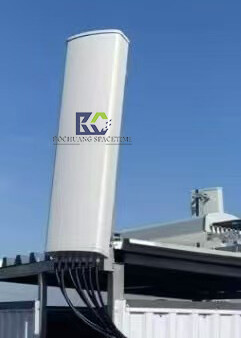
BCSK-JZTX06 6-Port Multi-Band Base Station Antenna (2G-5G/GPS/WiFi) | BOCCHRONOS
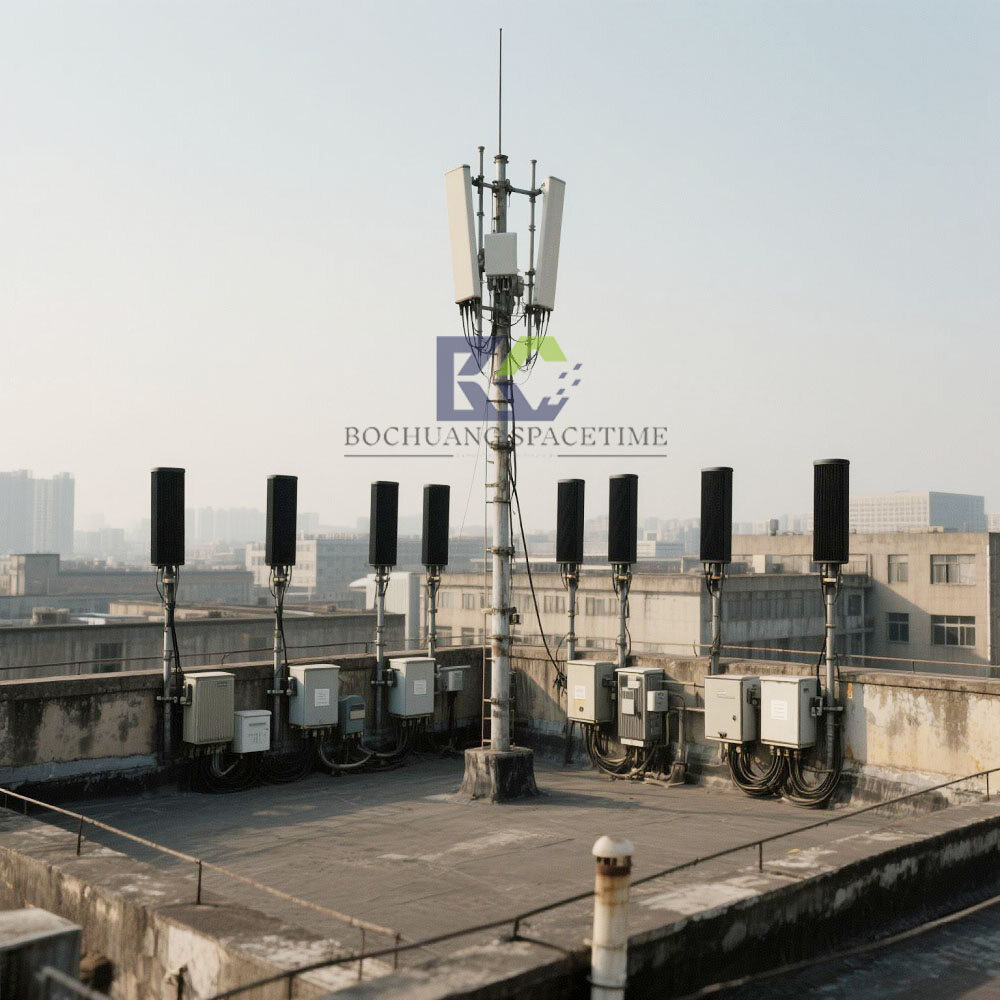
Bochuang Shikong BSK-JZTX06 Outdoor 6-Band Base Station Directional Antenna | 900M-5.8G Full-Band Coverage, 100W High Power, 65° Beamwidth, 5G/4G/WiFi Communication Panel Antenna
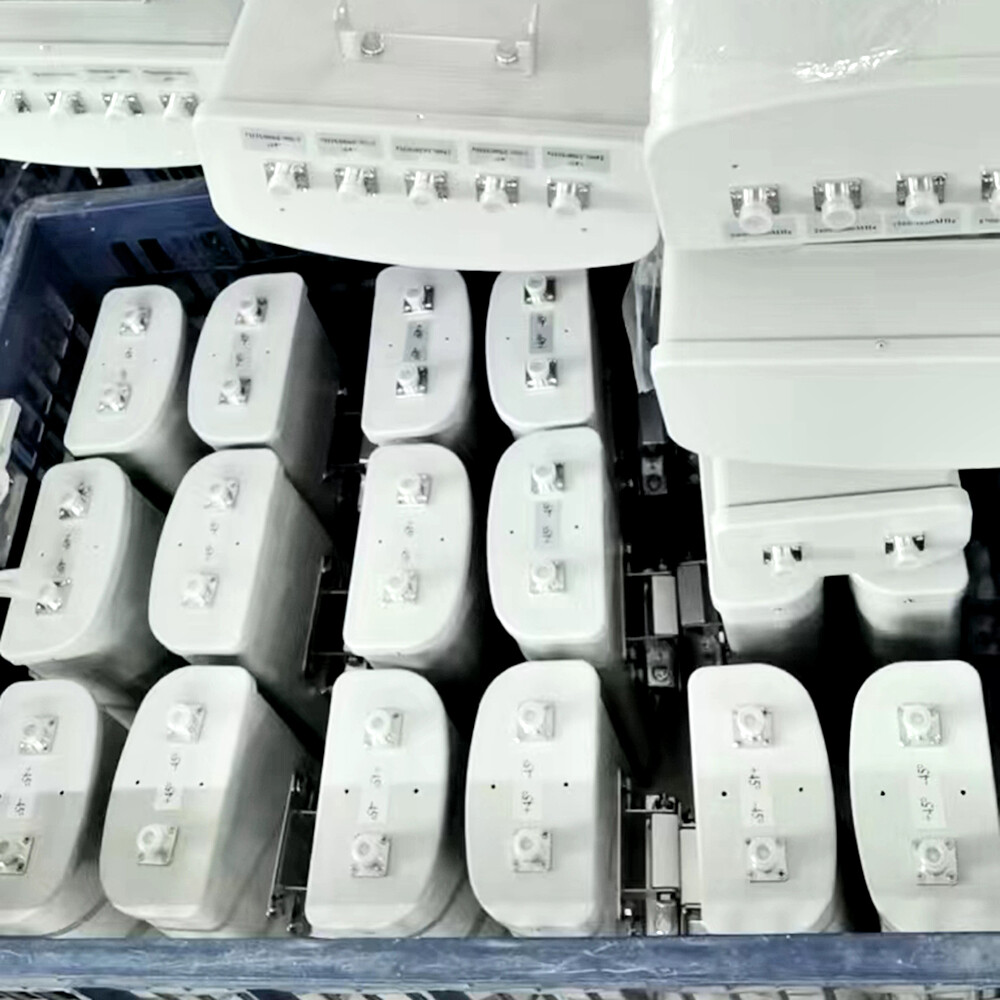
BCSK-JZTX10-N-K Outdoor 10-Band Base Station Directional Antenna | 300-5925MHz Ultra-Wideband 100W High-Power 5G/4G/WiFiMulti-Frequency Drone Jammer Antenna
Need custom products?
We offer OEM/ODM customization to meet your specific needs.
Contact us for a custom solution →